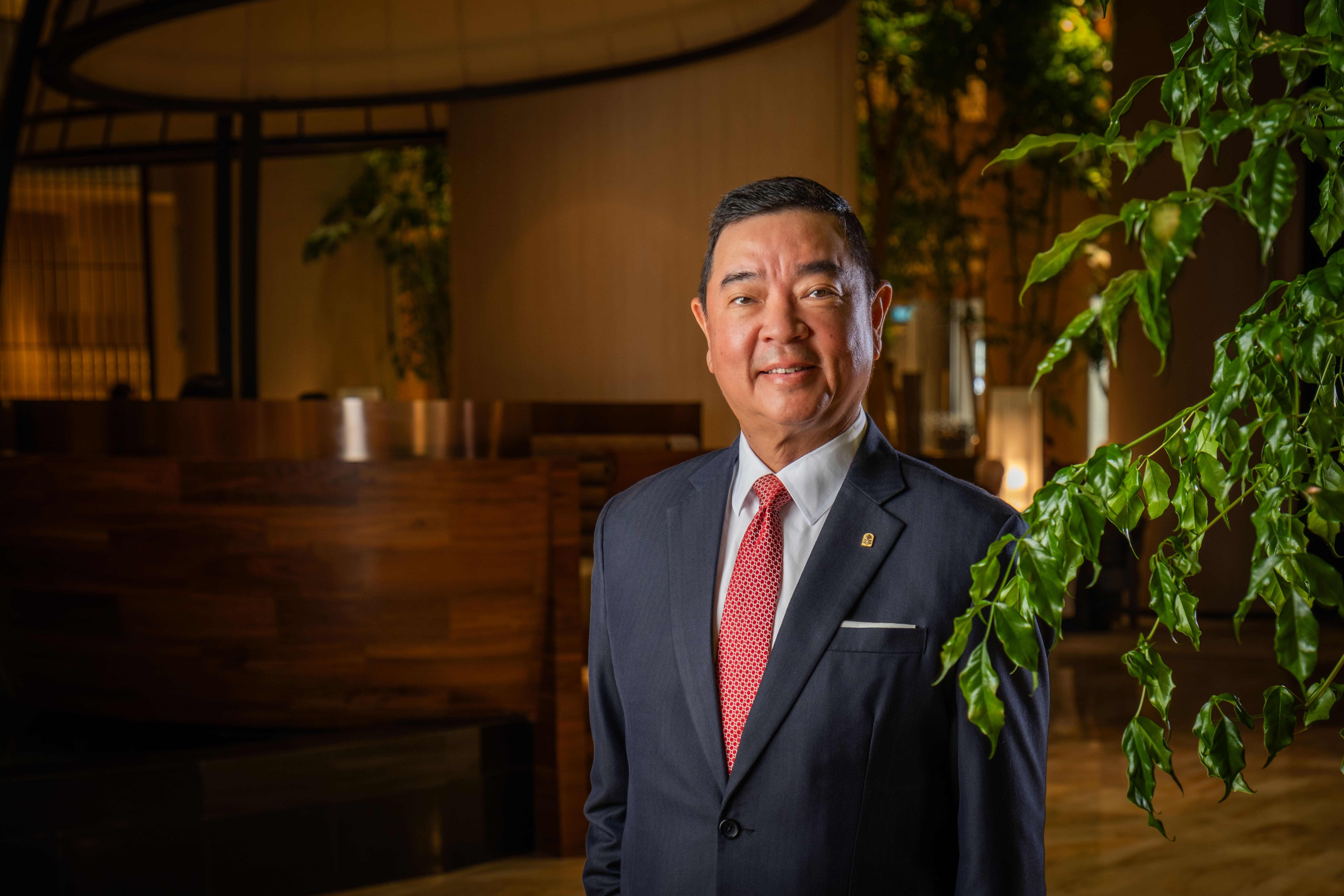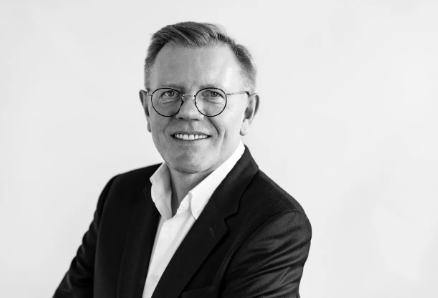
Through a career shaped by leadership roles within iconic maisons such as Cartier, Boucheron, Hermès, Georg Jensen, and Swarovski, Ragnar Hjartarson has established himself as a key expert in luxury transformation. Bridging business strategy, P&L performance, and creative direction, he represents a holistic approach to leadership in a rapidly evolving industry.
In this interview, Ragnar Hjartarson shares his vision of contemporary luxury, the challenges facing luxury maisons today, and his perspective on leadership at the crossroads of strategy and creativity.
Your career has led you to hold both strategic and creative leadership roles within major luxury maisons. Looking back, which experiences most shaped your vision of luxury and leadership?
I have had the privilege of evolving within five centennial Maisons, each offering a unique masterclass in luxury. While, Cartier, Boucheron, and Hermès forged my rigor regarding excellence of savoir-faire and creative audacity, my leadership roles at Swarovski and Georg complemented this with a layer of operational agility and market responsiveness. This 'dual school' allows me today to bridge the gap between the preciousness of the artisanal gesture and the high-level operational efficiency.
You have worked within maisons with strong identities and rich heritage. In your view, which core values remain constant across the luxury industry, regardless of market evolution or generational change?
The core of luxury lies in the tension between permanence and emotion. While the industry often moves at the rapid pace of seasons, the luxury object is anchored in what lasts - it carries a human story and is built to be passed down.
With generational changes, technology and digital platforms change how we communicate and approach certain things, but the soul within the object - the sense that it was crafted to be transmitted rather than discarded - remains one of the industry’s enduring foundations and fundamental pillars.
You operate at the intersection of strategic and creative transformation. How do you balance business performance, innovation, and respect for a brand's heritage and DNA?
I view heritage not as a weight from the past, but as a springboard. I believe that true innovation in luxury does not disrupt with the brand’s soul; it amplifies it.
My role is to ensure that creative audacity and commercial discipline work in total symmetry. As I mentioned, it is about bridging the gap between the preciousness of the artisanal gesture and high-level operational efficiency. When the beauty of the craft is supported by a high-performing model, the brand archives both cultural timelessness and sustainable growth.
Luxury is undergoing profound transformation driven by new client expectations, digital evolution, and globalization. How would you personally define contemporary luxury today?
For me, contemporary luxury has shifted from the mere possession of an object to the curation of meaning. Today, it is no longer enough for a product to be beautiful; it must have integrity. Personally, I define it as the intersection of cultural singularity and radical responsibility — the promise that an object is ethically crafted to be repaired and transmitted. In a globalized world, luxury’s truest value lies in its ability to remain a 'human' exception: a unique narrative shaped by the hand of the artisan that technology can support, but never replace.
You combine strategic direction, creative vision, and business performance management. What is your leadership philosophy in an environment where creativity and results must coexist?
I advocate for 'Disciplined Creativity': this means revitalizing icons to secure the financial foundation while simultaneously opening strategic collaborations to inject innovation. Performance is born when creativity is harnessed to serve the relevance of the offer. You must respect the DNA, but you must also give it the oxygen of modern culture to keep it alive.
My philosophy is based on pragmatic orchestration. I often apply an 80/20 rule: 80% of creative energy must be channeled into securing the Maison’s pillars and P&L, while the remaining 20% is dedicated to radical exploration and innovation without the immediate pressure of ROI. This 'creative sandbox' is what prepares tomorrow's growth while protecting today's results. A leader in this space must be a 'translator' who speaks the language of both the Studio and the Boardroom.
The transformation of luxury also requires new skills and evolving talent profiles. Which qualities do you believe are essential today for professionals entering or growing within the luxury industry?
Beyond technical expertise, I look for ‘brand humility’: the ability to set one’s ego aside in service of the brand’s essence. In a digital-first world, the talents of tomorrow must navigate two speeds: they must master high-speed tools like AI and e-commerce, while maintaining the infinite patience required for artisanal excellence. In luxury we need ‘poet-technicians’: those who marry technical mastery with a devotion to the brand’s essence.
Looking back on your international career, what is the most important lesson the luxury industry has taught you, both professionally and personally?
Coming from Iceland to study Political Science and Economics in France in the 90s, I arrived with a cultural curiosity that quickly turned into a lifelong passion for arts and craftsmanship in the beautiful city of Paris.
Professionally and personally, my career in luxury has brought me a deep fascination for the métier of craftsmanship, along with a sense of humility. It has taught me that we are only a part of a much longer life cycle. I’ve learned that continuity is not about standing still; it is a constant act of entrepreneurship. You must have the courage to innovate and the intellectual rigor to ensure that every new ‘stone’ you add to the building respects the foundation.
Ultimately, my interests in architecture, history, and craftsmanship have become my professional compass. They provide the analytical framework I use to ensure that a brand’s evolution remains both culturally authentic and commercially sustainable.
Chinese Portrait:
If you were an iconic luxury object: An object that has achieved distinctive relevance through simplicity, functionality, and outstanding design.
If you were a watch or jewelry creation: The Quatre ring by Boucheron. It symbolizes the union of four distinct motifs into one harmonious whole—much like my multi-faceted career path.
If you were a luxury destination: Copenhagen. For its equilibrium between nature and pure design; the "luxury of well-being" where "Hygge" meets quiet sophistication.
If you were a source of inspiration: Transmission. When a strategic vision becomes a tangible, crafted object.
If you were a guiding value: Empowerment. Defining the ‘what’ while giving talented people the freedom to discover the ‘how’.