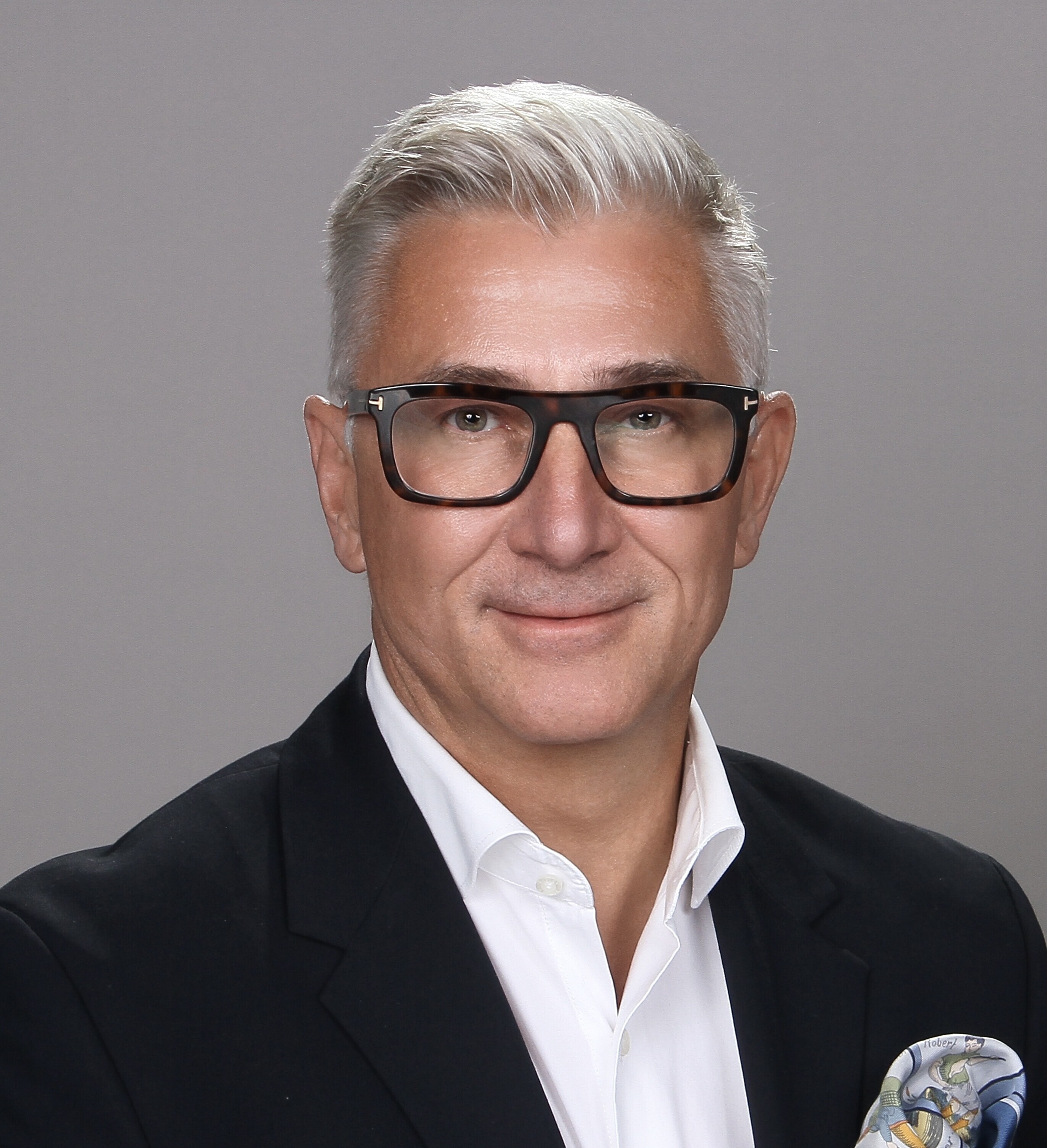
In this interview, he reflects on the defining stages of an extraordinary career, shares his vision of a luxury industry in constant reinvention between heritage and modernity, and reveals his conception of exceptional hospitality: human in its essence, bold in its ambition, and carried by teams who do not merely serve, they create legends.
1. Hello Franck! To begin, could you walk us through the key stages of your career, and particularly the defining moment that drew you toward luxury hospitality?
In tenth grade, I was supposed to pursue a handball sports programme, but I wasn't admitted, my physical abilities weren't enough to go professional. I was at a loss. One day, I ran into my old friend Philippe, who was heading off to the hotel school in Strasbourg. "I'm learning to cook, to serve, and I'm going to travel," he said. Eureka! I loved cooking with my mother, and English was my favourite foreign language, the language of rock'n'roll.
I told myself: "I'll go to hotel school and travel the world." I enrolled in the smallest programme, a vocational diploma, because my grades weren't up to standard. But then, a revelation: I loved everything and excelled. I was given the opportunity to continue my studies, a technical baccalaureate, a two-year higher diploma, a postgraduate programme at IMHI Cornell-ESSEC, and later an MBA at Henley Management College in the UK. I was meant to become a chef, but I pivoted and took the management path.
My first experience of luxury came at a Michelin-starred restaurant in Strasbourg, and during a holiday with my parents, I stood in awe before the beauty of the Carlton in Cannes, then my first school placement at L'Hermitage in La Baule, where wealthy Parisians came to spend the summer. The theatricality, the glamour, the gastronomy, the aesthetics, the attention to detail, the history and the life within those grand hotels fascinated me. The director was an emblematic figure, elegant, untouchable. Not the person I would become, but the one who would inspire my journey.
2. You were trained in hotel administration at Cornell-ESSEC, in management at Henley, and even in culinary arts in Strasbourg. How does this triple background, technical, academic, and managerial, concretely influence the way you run a palace like The Savoy?
The technical training I received at the Strasbourg hotel school, along with the hands-on placements during those formative years, still serves me to this day. It remains the backbone of my leadership style, rooted in discipline, human relationships, attention to detail, and the right mindset for high-end hospitality.
Pursuing a business education gave me the opportunity to deepen my theoretical knowledge in finance, marketing, human resources, and so on, preparing me to understand the non-operational, yet absolutely essential, facets of the hotelier's craft. But none of that counts without practice, the obstacles, the setbacks, and the daily lessons of real experience. As the saying goes: practice makes perfect, even if perfection remains unattainable, it is the journey that matters.
3. You have said that running The Savoy means being "the guardian of an identity far greater than oneself." How do you reconcile this duty of fidelity to a 136-year heritage with the need to innovate and remain in tune with the expectations of a contemporary clientele?
César Ritz, with the support of Auguste Escoffier, launched The Savoy on behalf of its owner Richard D'Oyly Carte, before going on to create and lend his name to his own celebrated hotels. Many renowned hoteliers have followed in succession, each tasked with preserving its heritage and securing its future.
Directors come and go, but The Savoy endures. In the meantime, it falls to me and my teams to carry that heritage forward, while continuously questioning ourselves to remain relevant in an ever more competitive market, and to deliver flawless yet differentiated service.
4. Reopening The Savoy in September 2020, in the midst of a global pandemic, was a bold gamble. Looking back, what did that experience teach you about yourself?
Despite the obstacles and the storms, you must try to keep a cool head, remain resilient, stay focused on the mission, surround yourself with talented people who share the same ambitions, be creative in the face of adversity, and above all, hold on to the joy of doing what you do.
5. In luxury hospitality, the guest experience rests on detail and emotion. How do you create truly memorable and distinctive experiences today?
You need a clear and passionate sense of direction, the ability to share that mission and convince leaders and investors, and the capacity to continuously inspire your team by empowering them and recognising their contributions. Details and emotions emerge when those conditions are in place, and when they are consistently repeated.
6. You have mentioned the integration of artificial intelligence in hospitality. How do you find the right balance between technological innovation and preserving the human essence of service?
We have a duty to innovate and improve our processes for greater productivity, and that means integrating AI. But the very heart of what adds value in luxury hospitality will always be service: human in all its sophistication and all its imperfections. We must therefore make use of technology, without ever neglecting or failing to nurture the most important asset in our industry, the human beings we work with.
7. With forty years in luxury hospitality, what is the most significant lesson this industry has taught you, both professionally and personally?
Be curious, take risks, allow yourself to be surprised, fall and get back up, and stay relevant. Love what you do with passion, or change careers. Life is too short to be bored.
8. Chinese Portrait
- If you were an iconic spice of haute cuisine: Pepper — in all its varieties
- If you were a song: Ain't No Mountain High Enough — Marvin Gaye & Tammi Terrell
- If you were a city: London
- If you were a book: The Unbearable Lightness of Being — Milan Kundera
- If you were a leadership mantra (from John C. Maxwell): A leader knows the way, goes the way, and shows the way.